
History
That of a house of waters by the sea: a spring that emerges warm from the earth, a town that took its name from it, and a balneari that has served the same mineral-medicinal water since 1818.
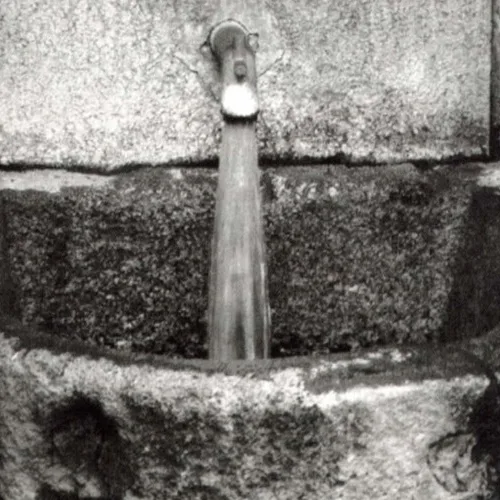
The town of the hot water, 13th century
Before the balneari, there was the water.
In Caldes d'Estrac — Caldetes to locals — the water has always been in charge: for millennia, the warm spring that emerges from the earth has given this corner of the Maresme coast its name, its trade and its character.
Geology explains the wonder. Rainwater seeps into the earth — its recharge zone is the Montseny massif — and sinks to depths of between 2,000 and 3,000 metres, where geothermal heat warms it and makes it dissolve the minerals of the rocks. Then, by the thermosiphon effect, it climbs back up through the tectonic fractures and emerges in Caldetes at 38.8 °C. The reserves of these geothermal systems are so abundant that the flow never stops.
A thousand years around the spring
The town did not grow up around a square or a castle, but around water that emerged hot from the ground. The name still says so: caldes means hot water, and "Estrac" comes from the old place name Estarac, a very ancient personal name whose origin scholars have never quite agreed on.
-
Iberians (Laietani) The water was already in use
This stretch of coast was Laietani (Iberian) territory long before the Romans arrived. The thermal springs of Caldes d'Estrac were already being used in Roman times: remains from that period have been found in the municipality, and the town baths were raised on top of old Roman thermae. From that hot water — aquae calidae in Latin, as local tradition still remembers it — comes the name Caldes.
-
1219 The hospital that made a town
That year the lords of Mataró castle — Guillema de Castellvell and her son Guillem de Montcada — handed over the hill of Caldes to the hospital and church that the Barcelona knight Pere Gruny had built beside the thermal springs. It is the oldest surviving document about the place, and the origin of today's town centre.
-
1396 From quadra to barony of Barcelona
From a quadra — a small feudal district — dependent on the parish of Sant Vicenç de Llavaneres, Caldes became a barony: the rector Francesc Fabre sold the city of Barcelona the jurisdiction and the rights he held over the parish and over the thermal baths. From the fifteenth century on, the town was governed by a bailiff appointed by the Barcelona councillors.
-
1715 A municipality of its own
With the Nueva Planta decrees, Barcelona lost its privileges and Caldes d'Estrac broke away from the barony to become a municipality in its own right. That independence was not born of any falling-out among neighbours, but of the collapse of its former mistress's rights.
-
1857 The arrival of the railway
The first railway line on the peninsula, between Barcelona and Mataró, opened in 1848, but the journey ended at Mataró. Caldes d'Estrac was not connected until nine years later, in January 1857, when the line was extended to Arenys de Mar. In that year alone, 72,026 passengers travelled the new stretch: the train changed life in the town and opened the door to the summer visitors.
-
1870-1920 The golden age of summering
Caldetes lived its first golden age as a summer retreat for the Catalan bourgeoisie, drawn by the thermal waters and by the sea. Apel·les Mestres, Joan Maragall and Jacint Verdaguer all passed through the town; Verdaguer came accompanying the family of the Marquis of Comillas — who had settled here to take the waters — and it was in Caldes, on 10 January 1883, that he dated his poem "Vora la mar" ("By the sea"). Of that splendour there still remain the Modernista and Noucentista villas of the Passeig dels Anglesos.
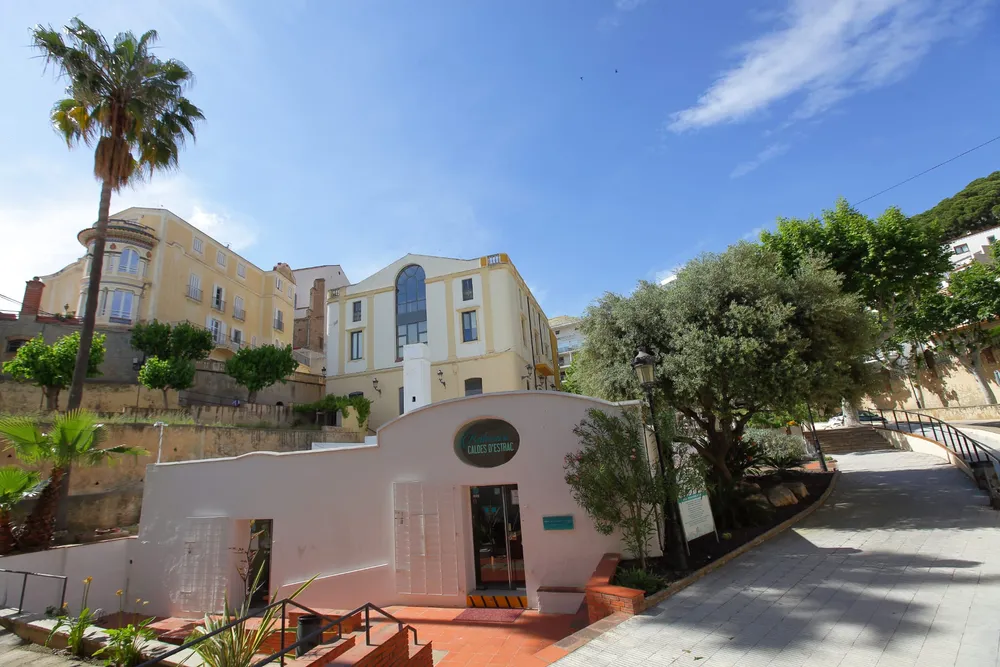
Running through the middle of all this history is our own: in 1818, when the train was still four decades away from reaching the town, this house was already serving the same water it serves today.
More on the town's history on the website of the Caldes d'Estrac Town Council (opens in a new window).
Since 1818
"Mineral-medicinal water since 1818." It is the date that accompanies the name of the house, and the shortest summary of its history: more than two centuries of baths in the water of the spring.
No legends needed: the water itself certifies it. Over the last 200 years its physico-chemical analysis has remained unchanged, with the same flow and the same temperature. Few houses can tell their story with such solid evidence.
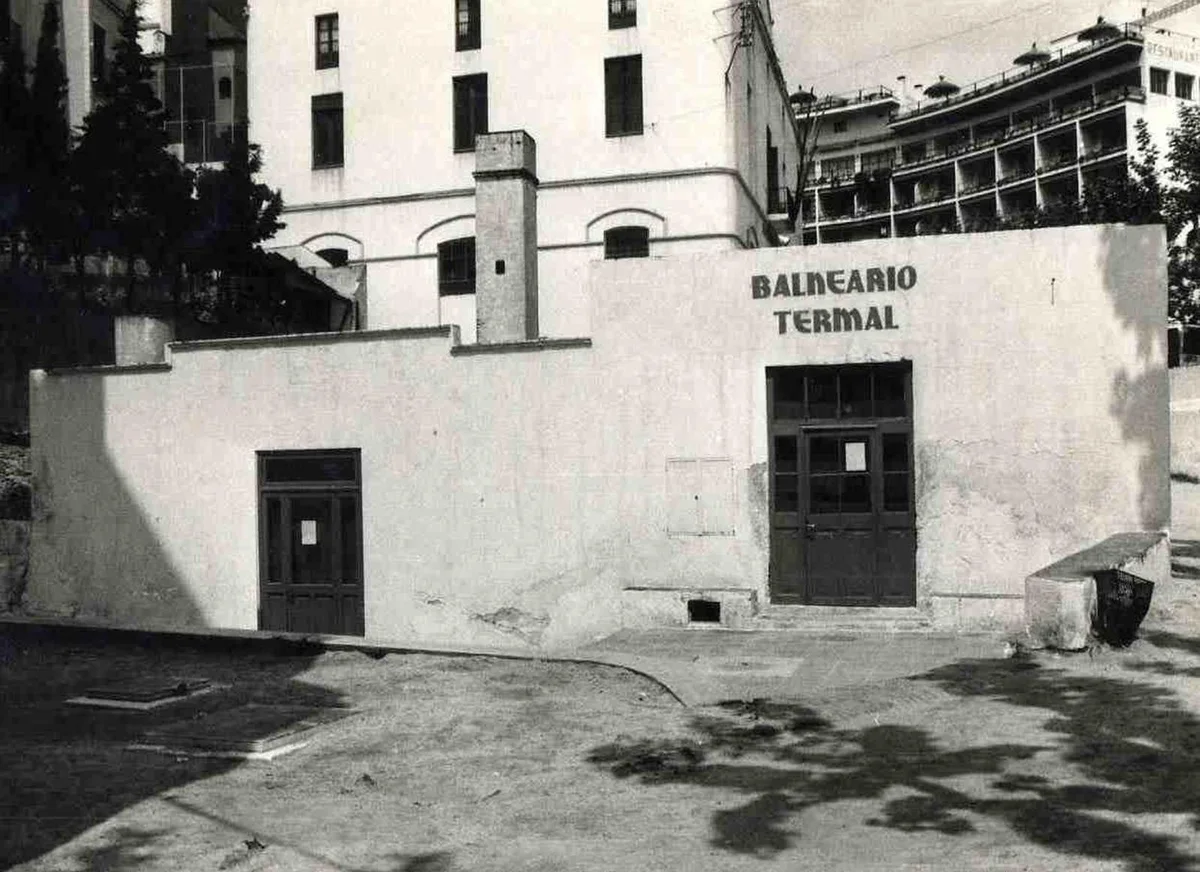
The water that emerges from 2,800 metres down
Beneath the balneari, a fault brings the Vallès-Penedès depression into contact with the Littoral system. At that point of tectonic fracture, some 2,800 metres down, the Caldetes spring is born: water heated by the geothermal effect that climbs the tectonic fractures and emerges at 38.8 °C, mineralised with the granitic minerals of the Littoral range. From the same geological family spring the Font Picant in Argentona and the Titus spring in Arenys de Mar.
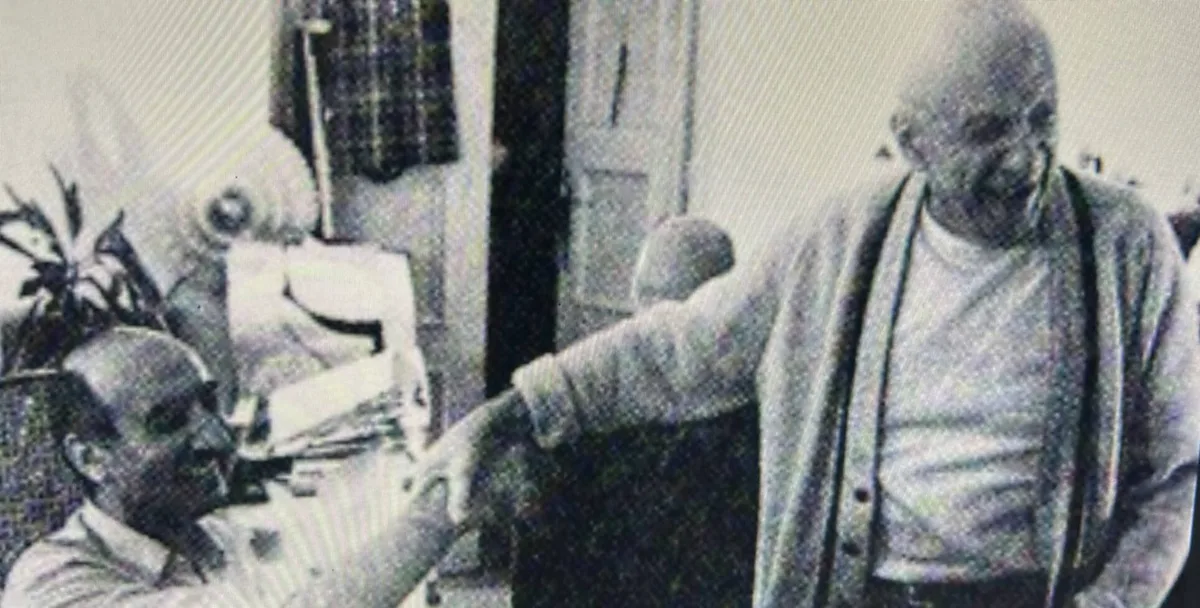
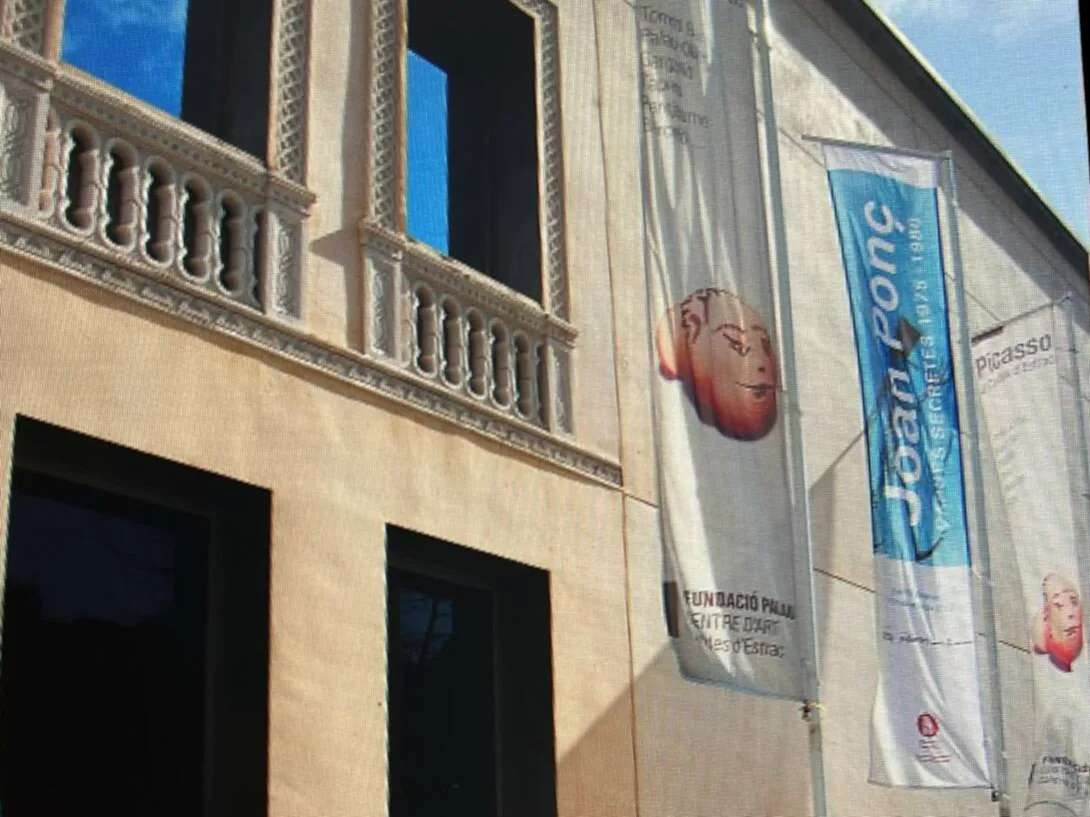
Picasso and the Fundació Palau
The thermal tradition turned Caldetes into a summering town that drew artists and illustrious visitors. From that cultural legacy remains an extraordinary neighbour: the Fundació Palau, one of the museums holding one of Spain's most important private Picasso collections, with works by Tàpies, Miró, Barceló and Perejaume too.
The combination that charmed the summer visitors of a century ago still works: a museum morning, a thermal-water afternoon, and the sea 150 metres away.
The balneari, today
The story is still being written. In recent years we have renewed the fountain of the spring, the jacuzzi and the façade of the house, and we hold the Biosphere sustainable tourism certification, reviewed every season: the modern way of caring for an ancient resource.
What does not change is the essential: the same water, emerging at the same temperature, for anyone who comes to feel it.
Come and live it
Two centuries of history fit into one morning's bath.
All therapies by advance booking: we keep numbers carefully limited · 4.2/5 on Google